
Pool Systems & Parts Guide
Understand your pool's anatomy. Learn where each part is located, what can go wrong, and how our team pinpoints leaks fast.
Your Pool is a Complex System
A swimming pool has many components working together — the shell, plumbing, equipment pad, lighting, and more. Leaks can develop in any of these areas.
Understanding where each part is located helps you describe symptoms to our technicians, which means faster diagnosis and lower repair costs.
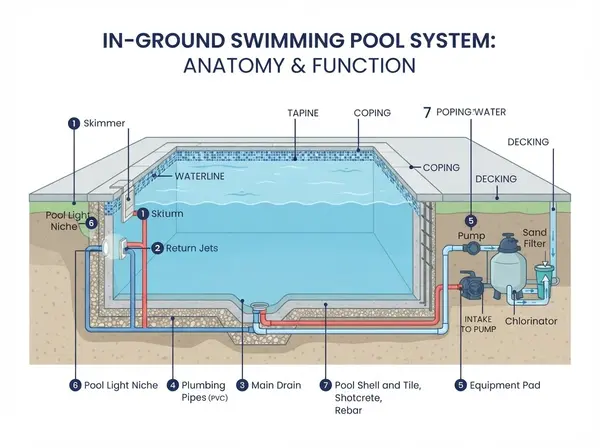
Common Leak Locations
These are the most common areas where pool leaks develop. Click through to learn more about each component.
Pool Shell & Tile
Common Problems
- Cracks in the pool surface
- Loose or falling tiles
- Coping stone separation
Location
Visible areas around the waterline, steps, and corners
Return Jets & Fittings
Common Problems
- Loose or cracked faceplates
- Gaps around fittings
- Fittings pulling away from wall
Location
Wall fittings where water returns to the pool
Skimmer Assembly
Common Problems
- Cracked skimmer throat
- Broken skimmer body
- Broken skimmer plumbing lines
Location
Skimmer box at the pool deck level
Underground Plumbing
Common Problems
- Pressure line leaks
- Suction line leaks
- Pipe fitting failures
Location
Buried pipes connecting pool to equipment
Light Niche & Conduit
Common Problems
- Light fixture gasket failure
- Conduit pipe leak
- Cracked light niche
Location
Pool light housing and its wiring conduit
Main Drain Assembly
Common Problems
- Drain cover crack
- Hydrostatic relief valve leak
- Drain sump breach
Location
Bottom of the pool (deepest point)
Quick Leak Detection Tips
Bucket Test
Fill a bucket with pool water and set it on a step. Mark both water levels. After 24 hours, compare. If the pool lost more water than the bucket, you likely have a leak.
Dye Test
With the pump off, squeeze food coloring near suspected areas. If dye gets sucked into a crack or fitting, you've found a leak location.
Wet Spots
Check for soft or wet spots in the yard between the pool and equipment pad. This often indicates an underground plumbing leak.
Related Resources
Keep learning about your pool with these helpful guides from Florida Leak Locators.
The 24-Hour Bucket Test
Find out if your pool is losing water from evaporation or an active leak with this simple DIY test.
Read MoreGlossary of Pool Terms
A handy reference for understanding skimmers, return jets, main drains, and more.
Read MoreCommon Pool Leak Signs
Cracking tiles, wet spots, air in the pump — learn the warning signs every pool owner should know.
Read More
Losing Water in Your Pool?We Pinpoint & Fix Leaks Fast
Don't let hidden leaks raise your water bills or damage your pool. Call our Central Florida experts today for fast, reliable leak detection!